May 5, 2026
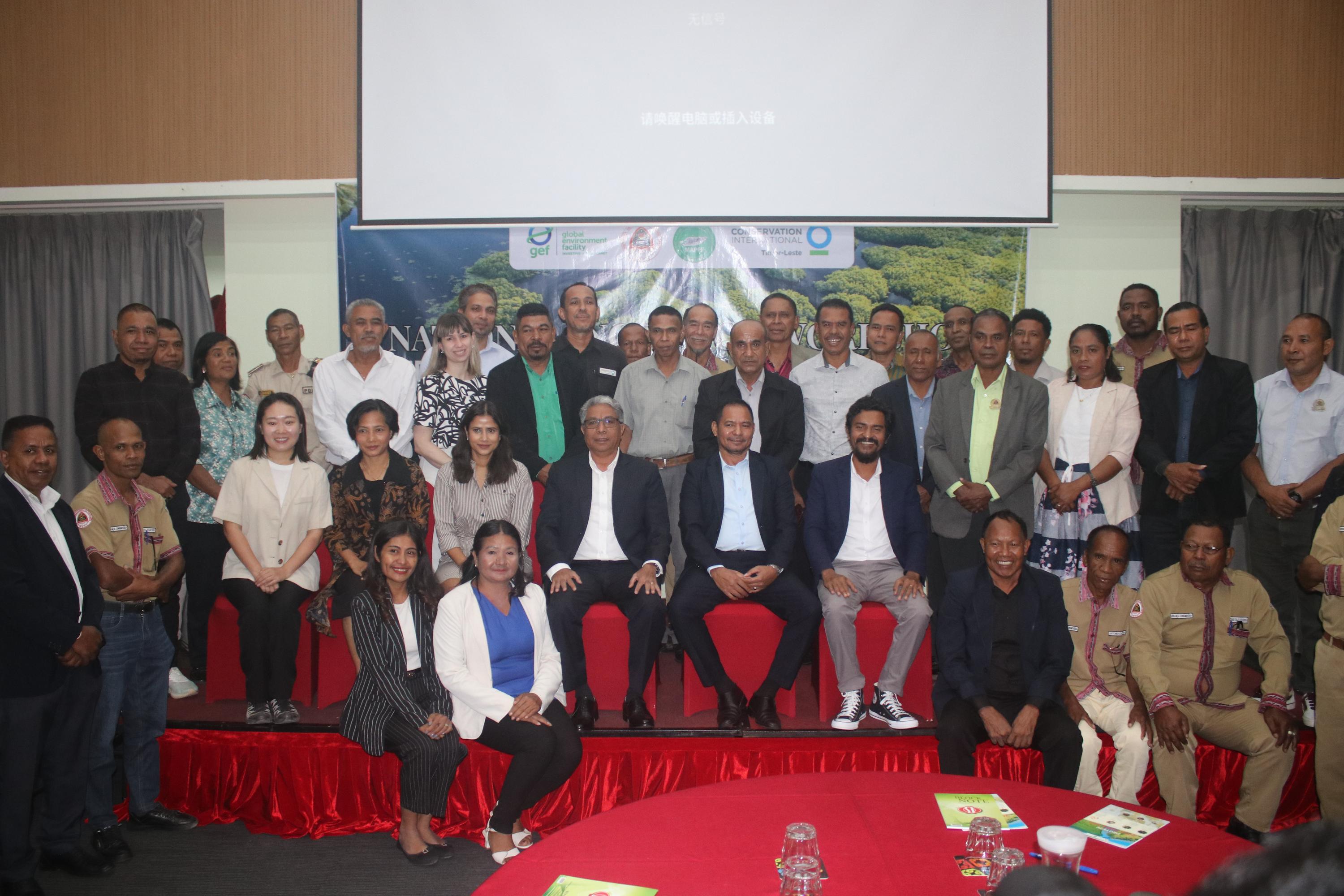
Dili, Timor-Leste – In early May (05/05/2026) – An important step toward protecting and conserving wetland ecosystems in Timor-Leste was marked with the official launch of the project “Improving Wetland Management for Biodiversity and Improved Human-Wildlife Coexistence in Timor-Leste,” through an inception workshop held at Suai Room, Timor Plaza, Dili.
The workshop brought together representatives from government institutions, development partners, civil society organizations, local communities, environmental specialists, and technical experts to align efforts and officially launch this important environmental initiative.
In the opening remarks, the Minister of Agriculture, Livestock, Fisheries and Forestry, Eng. Marcos da Cruz, stated:
” Today, we are gathered here to discuss the best management approaches for wetlands and to identify possible solutions to address several environmental challenges, such as over-fishing, environmental degradation, and sedimentation around the lagoons and protected areas.
He ended his statement by saying:
“We need effective wetland management to generate benefits and improve livelihoods through social, economic, and environmental sustainability,”
The project aims to strengthen conservation and sustainable management of wetlands across Timor-Leste, enhance biodiversity conservation, and promote improved co-existence between communities and wildlife in target areas.
Wetlands are among Timor-Leste’s most valuable natural assets, providing significant ecological and socio-economic benefits. They help regulate water systems, reduce flood risks, store carbon, sustain fishery resources, and provide habitats for diverse plant and animal species. For many communities, these ecosystems are also vital sources of food security, income, and resilience.
However, these ecosystems face increasing threats, including habitat degradation, unsustainable resource use, climate change pressures, and rising conflict between people and wildlife.
This project seeks to address these challenges through a comprehensive and collaborative approach focused on:
- Improving Wetlands Management.
- Promote safe coexistence between human-wildlife (crocodiles).
- Support sustainable livelihoods for target communities.
- Strengthening environmental education and regular monitoring.
During the workshop, participants discussed the project’s objectives, implementation strategies, expected outcomes, and the roles of key partners in ensuring effective and sustainable implementation.
In his opening remarks, Manuel Mendes, the CI-TL Country Director, emphasized the importance of collective action:
“The idea for this project began in 2019. Initially, we considered developing a crocodile management project. However, over time, we also started to focus on crocodile habitats, particularly wetlands (Lagoon and lake). From there, we began collecting information about wetlands and lagoons located along the southern coastal areas.”
“We identified and registered 35 lagoons; however, due to the limited project budget, we decided to focus first on seven lagoons, namely Fuli Lagoon, Onu-Bo’ot, Hasan Foun, Bikan Tidi, We-lenas lake, Modo-mahut, and Naan kuru. Through this project, we are not only focusing on crocodiles, but also on other forms of biodiversity such as birds, fish, vegetation, and other wetland ecosystems,” the Country Director Adding.
He concluded his remarks by delivering a message to the authorities:
‘We also urge local authorities to continue informing communities not to hunt endangered birds such as lorikeets and cockatoos.”
The municipal Authority support the implementation of this project.
Miguel Aramada Cardoso,one of the Municipal President Authority from Covalima Municipality stated:
“We congratulated CI-TL for the initiative, and we recommended the CI-TL and the Government to combine Science, culture and the experience for the implementation of this project. So, people cannot enter the crocodile’s habitat or Vise verse.”
“Looked at the economic aspect we need to promote tourism attractions for the interest of the people and country.”
The initiative reaffirms that effective conservation requires strong partnerships between government institutions, local communities, technical experts, and development partners.