August 20, 2026
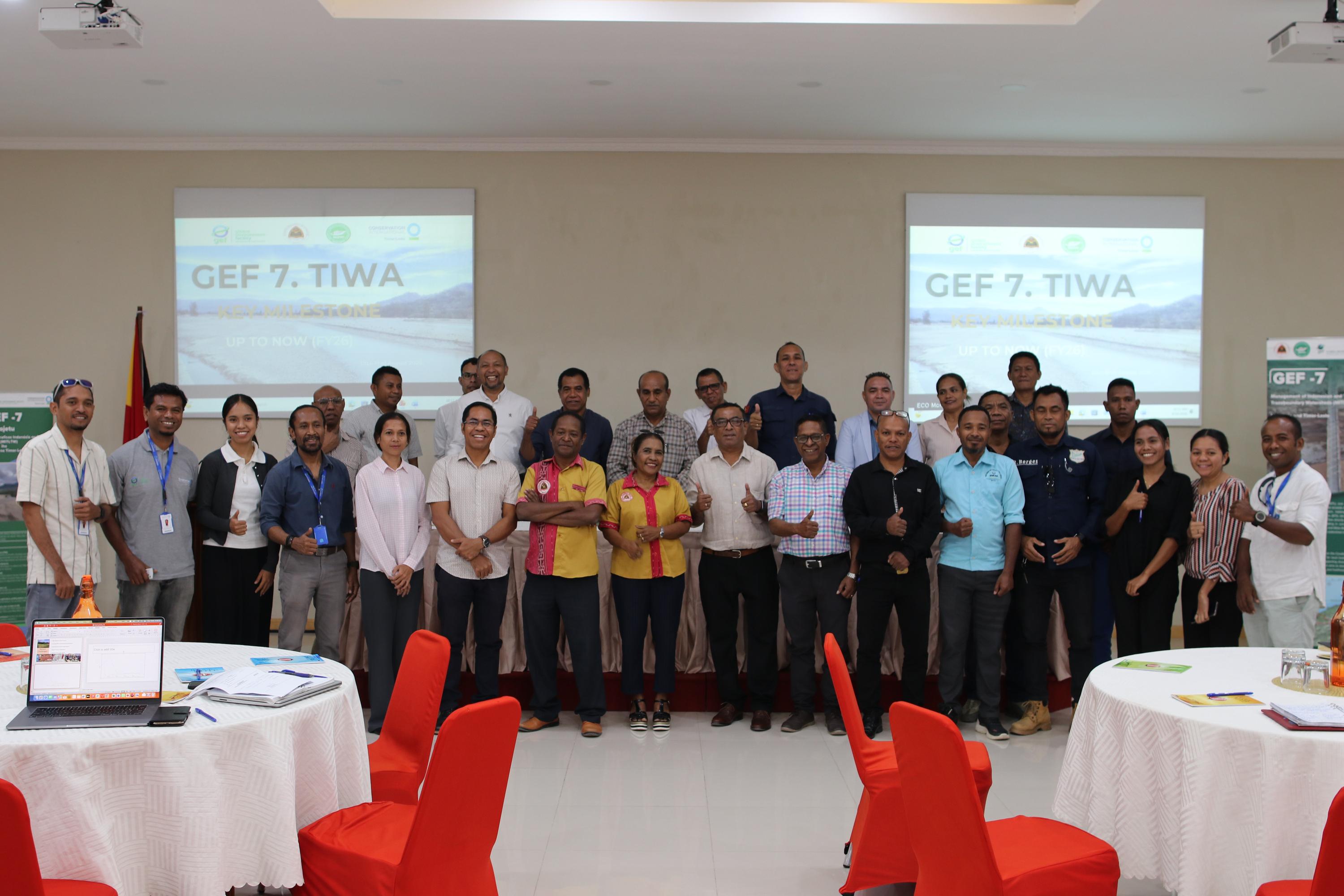
Today, Wednesday (19/08), Conservation International Timor-Leste (CI-TL), through the Timor Island Watersheds Project, in collaboration with the General Directorate of Forestry, Ministry of Agriculture, Livestock, Fisheries and Forestry (MALFF), organized the Second Meeting of the National Council for Watershed Management (KNJBH).
The meeting was held at Tower, Dili, with the objective of bringing stakeholders together to exchange views and develop ideas on how to establish and strengthen the KNJBH, so that the proposed concept can eventually receive approval from the Council of Ministers.
At the opening of the meeting, CI-TL Country Director Manuel Mendes stated that the main objective of the meeting was to initiate dialogue among stakeholders and build consensus on the establishment, mandate, structure, and operationalization of the KNJBH as a permanent national body. The KNJBH will play a role in preparing Timor-Leste’s future representation in the Joint Forestry Working Group (JFWG) between Indonesia and Timor-Leste, particularly on transboundary watershed management under the Timor Island Watersheds Project.
The meeting also aimed to provide clear direction for the next phases of collaboration and ensure that all stakeholders share a common understanding and are aligned around a shared vision, priorities, and practical next steps.
Watersheds, including rivers and water systems, play a very important role in the livelihoods of communities across Timor-Leste. Water provides essential resources for consumption, agriculture, food production, and strengthening community resilience to the impacts of climate change. Therefore, watershed management requires stronger planning and coordination among relevant sectors and institutions.
During the meeting, participants discussed the need to bring together efforts from all sectors to manage and protect rivers and watersheds.
Timor-Leste has a total of 191 rivers and watersheds, of which 151 watersheds are considered particularly significant and important for water security, food security, and climate resilience. Therefore, there is a need for a mechanism that can provide coordinated oversight, strengthen collaboration, and promote sustainable management of water resources.
CI-TL Country Director also emphasized: “Through the KNJBH, relevant stakeholders can jointly develop concepts and priorities, including exploring opportunities to access external support and funding to which Timor-Leste is entitled. This cooperation will help strengthen national capacity in watershed planning, management, and conservation, as well as ensure the sustainability of the KNJBH itself.”
The meeting was also considered an opportunity to strengthen collaboration among CI-TL, the National University of Timor Lorosa’e (UNTL), and government institutions through the Timor Island Watersheds Project. These initiatives can contribute to research, data sharing, and capacity development for sustainable watershed management.The discussions also addressed cooperation through the Joint Forestry Working Group (JFWG), which is composed of members from Timor-Leste and Indonesia. The group can play an important role in monitoring and coordinating issues related to transboundary watersheds, particularly the Masin and Talau-Loes river basins, which involve water systems that cross national borders.
Director-General of Forestry Hermenegildo de Almeida Granadeiro emphasized the important principle that “Water has no borders.” This principle highlights that water resource management requires cooperation and shared responsibility, particularly for transboundary watersheds.
With the establishment and operationalization of the KNJBH, stakeholders will have a platform to continue dialogue, share information, jointly identify priorities, and coordinate actions related to watershed management. The mechanism will also help prepare Timor-Leste for strong and coordinated representation in the JFWG between Timor-Leste and Indonesia, particularly on transboundary watershed management.
Meanwhile, the National Director for Water and Sanitation Regulation at the Ministry of Public Works, Marcolino de Jesus Babo
expressed his appreciation to Conservation International Timor-Leste and MALFF for establishing the National Council for Watershed Management. He considered the establishment of the Council an important step in advancing Timor-Leste’s national interests.
He also emphasized: We need to address the relevant legal aspects to ensure the sustainability of the National Council for Watershed Management and to consider its impact on the livelihoods and well-being of communities.”
The Second KNJBH Meeting represents an important step toward strengthening national coordination and developing an integrated watershed management mechanism. Through cooperation among the government, organizations such as CI-TL, universities, and other relevant partners, Timor-Leste can continue to strengthen the protection and management of water resources, ensuring sustainable benefits for communities and future generations.