July 30, 2025
Event aims to build capacity and foster collaboration among Timor-Leste and Indonesian youth on Biodiversity Conservation
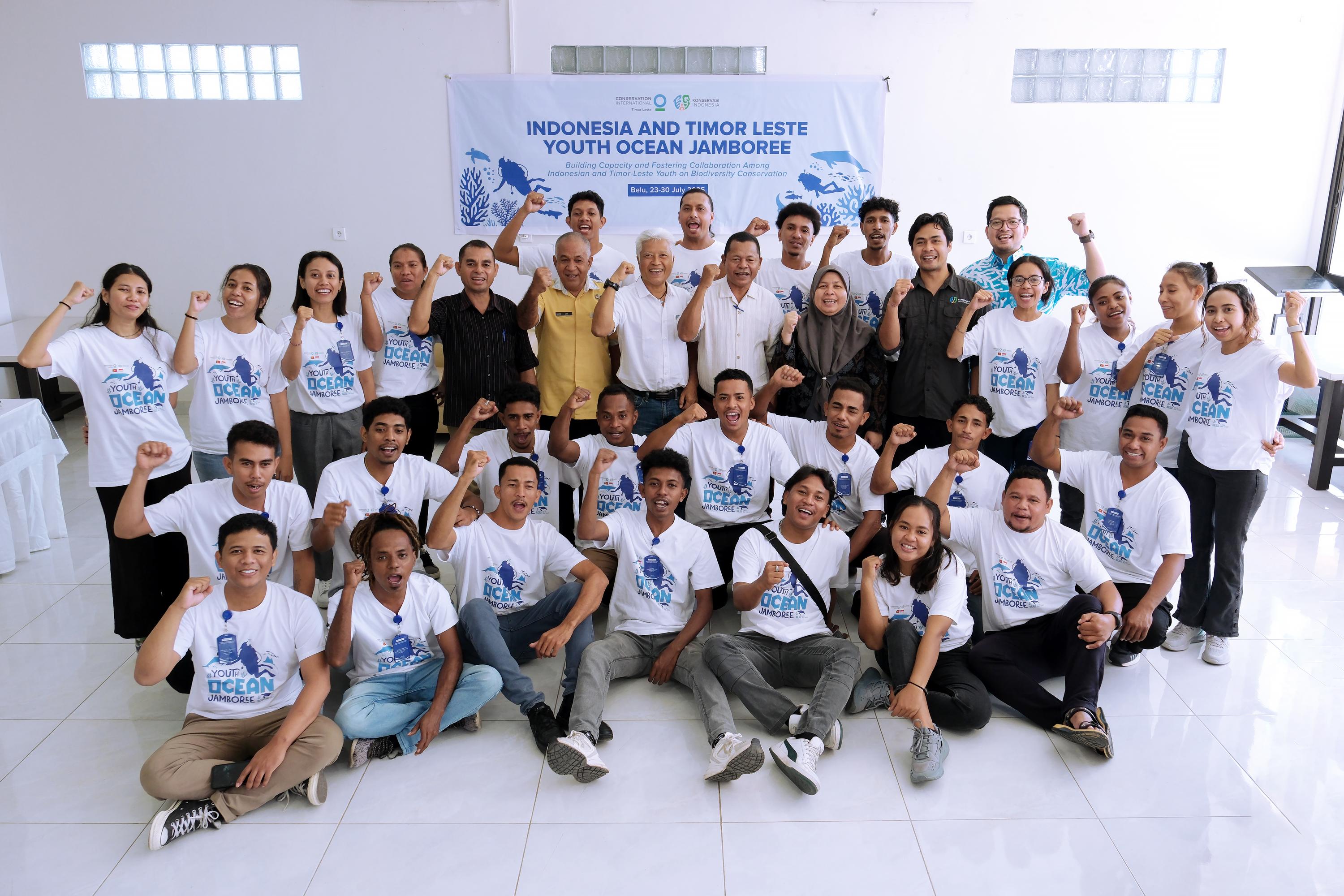
Twenty young people from universities and high schools from Timor-Leste and Indonesia recently participated in a Youth Ocean Jamboree - a multi-country collaboration initiated by Konservasi Indonesia (KI) and Conservation International (CI) Timor-Leste, with support from the local government and local universities last week.
The initiative, held in Belu Regency, East Nusa Tenggara, Indonesia, to aims to develop young people from local communities from both sides of the Ombai-Wetar Strait into marine observers and researchers so that they can collectively contribute to biodiversity conservation and marine resource management locally.
This initiative is about more than training—it’s about building a generation of Timorese ocean leaders who can bridge science, culture, and community. The Ombai-Wetar Strait connects our countries, our ecosystems, and our futures. To protect these waters, we need young people who understand their importance and are equipped to take action. This is the future of ocean conservation—for Timor-Leste, and for our region.”
The Ombai-Wetar Strait separates the waters of the Alor Archipelago from the islands of Wetar, Atauro, and Timor in the Lesser Sunda Islands and is recognized as one of the world's most important marine corridors.
These waters serve as a migration route for 14 whale species, including pygmy blue whales, seven dolphin species, and seven migratory shark and ray species, including whale sharks, pelagic thresher sharks, and oceanic manta rays. Besides being rich in megafauna, this region also harbors significant coral reef ecosystems, seagrass meadows, and mangrove forests – all coastal ecosystems that support the lives of coastal communities and act as a natural buffer against climate change.
The Lesser Sunda Seascape was chosen as the training location for our first Ocean Jamboree because, besides being a crucial megafauna migration corridor, this area is also a fisheries hub that supports food security and the livelihoods of coastal communities in both countries. Conservation efforts in this region can only be achieved through collaboration between the two countries. We need cross-border joint action, and the young generation should be at the forefront of change.”
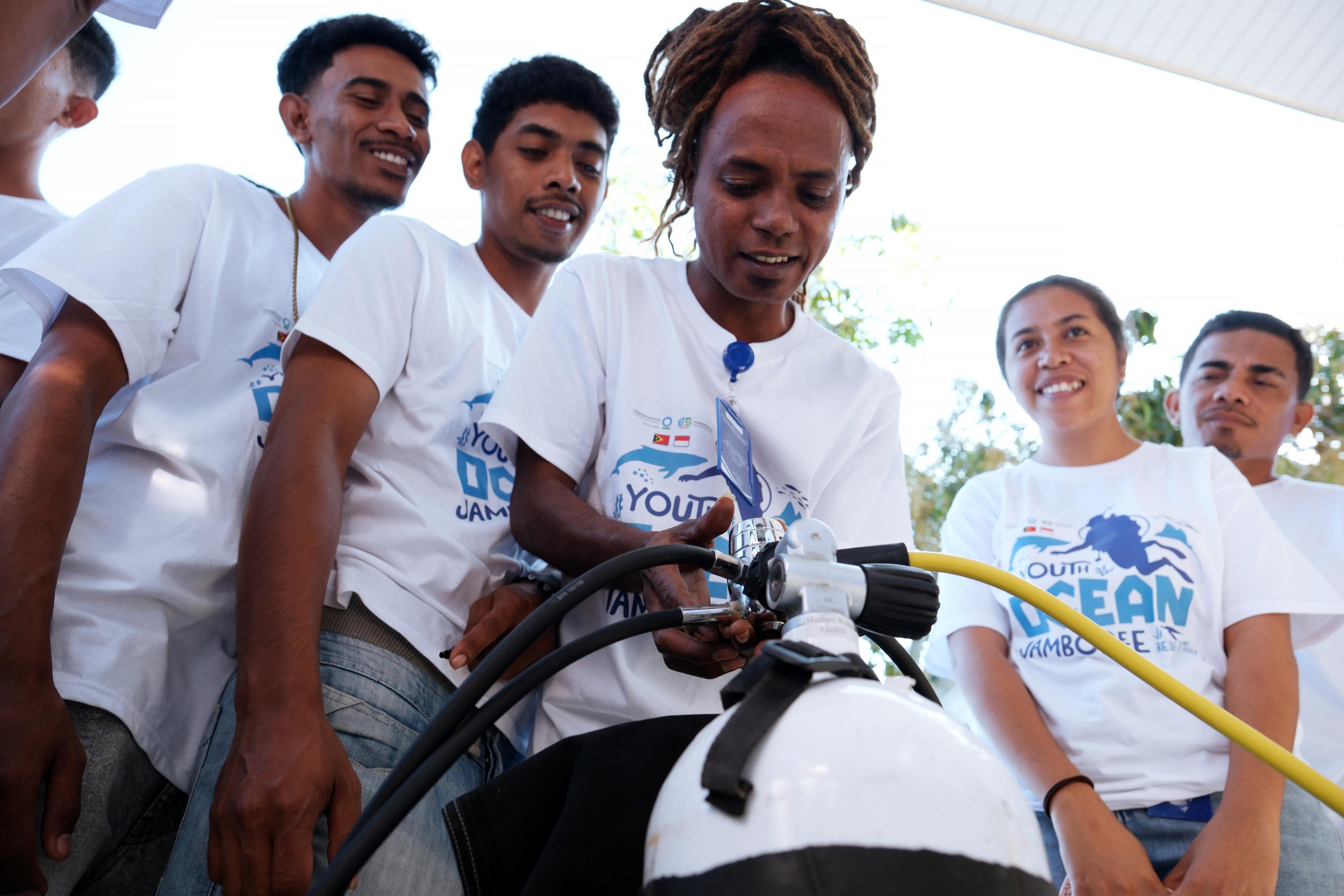
Fitri also emphasized the importance of the young generation’s role in sustainable marine management. “Through a series of training sessions, field practices, and scientific discussion sessions, participants are expected to not only understand the scientific aspects of marine ecology but also become conservation advocates in their communities.”